October 10, 2026
Japan Luggage Express
Japan Luggage Express Ltd.
Kumamoto Earthquake 2026
Kumamoto Earthquake 2026
Latest Updates, Death Toll, AEON Mall Explosion and Recovery
Last updated: October 1, 2026
A powerful magnitude 7.1 earthquake struck Kumamoto Prefecture on Japan’s southern island of Kyushu on July 28, 2026, causing widespread deaths, injuries, building damage and major disruption to transportation and essential services.
The earthquake occurred at approximately 4:27 p.m. Japan Standard Time. The Japan Meteorological Agency measured the earthquake at magnitude 7.1 and a depth of 16 kilometres.
The strongest shaking reached seismic intensity 7, the highest level on Japan’s seismic intensity scale, in Uki City and Hikawa Town. Seismic intensity 6-upper was recorded in several surrounding areas.
More than two months after the disaster, emergency rescue operations have ended and much of the region’s infrastructure has been restored. However, thousands of people remain unable to return to their homes, temporary housing continues to be built and investigations into several major incidents — particularly the deadly explosion at AEON Mall Kumamoto — are continuing.
Latest Summary of the Kumamoto Earthquake
- The main earthquake occurred at approximately 4:27 p.m. on July 28, 2026.
- Magnitude: 7.1.
- Depth: 16 kilometres.
- Maximum seismic intensity 7 was recorded in Uki City and Hikawa Town.
- The latest Kumamoto Prefecture figures list 38 deaths.
- 370 people were reported injured in the prefecture’s September 29 update.
- Seven people died in the explosion at AEON Mall Kumamoto.
- Nine workers died at the Nippon Paper Industries factory in Yatsushiro.
- As of September 29, 1,409 people remained in 29 evacuation shelters.
- The Kyushu Shinkansen resumed full-line operation on September 18.
- Some conventional railway sections were still closed at the beginning of October.
- Aso Kumamoto Airport has returned to normal terminal operations.
- Earthquake activity remains above normal levels, although the risk of another earthquake producing seismic intensity 5-lower or stronger has substantially decreased.
Japan Names the Disaster the 2026 Kumamoto Earthquake
The Japan Meteorological Agency formally named the earthquake sequence the “Reiwa 8 Kumamoto Earthquake,” written in Japanese as 令和8年熊本地震.
The official name applies to the series of earthquake activity that began with the magnitude 7.1 event on July 28.
The designation distinguishes the disaster from the destructive Kumamoto earthquake sequence of April 2016, which also produced seismic intensity 7 in the prefecture.
Kumamoto Earthquake Death Toll Reaches 38
The death toll changed repeatedly during the first several weeks after the earthquake as victims were recovered, doctors formally confirmed deaths and authorities investigated whether individual deaths were related to the disaster.
At one stage, the reported total reached 39. Authorities later removed one case after determining that the death was not related to the earthquake.
The latest Kumamoto Prefecture report, dated September 29, lists 38 deaths.
The confirmed fatalities included deaths in Yatsushiro City, Uki City, Kashima Town, Kosa Town and Hikawa Town.
Some of the deaths were caused directly by collapsing structures and earthquake-related accidents. Authorities also investigated cases in which evacuation conditions, heat or physical stress may have contributed to death.
370 People Reported Injured
The number of people reported injured also increased as medical and municipal records were consolidated.
According to Kumamoto Prefecture’s September 29 update, 370 people had been reported injured.
The figure included people with serious injuries, moderate injuries, minor injuries and cases whose severity had not yet been fully classified.
The increase from the much smaller numbers reported immediately after the earthquake does not necessarily mean that hundreds of new injuries occurred later. Many cases were added as hospitals, municipalities and other agencies completed their reporting.
What Happened at AEON Mall Kumamoto?
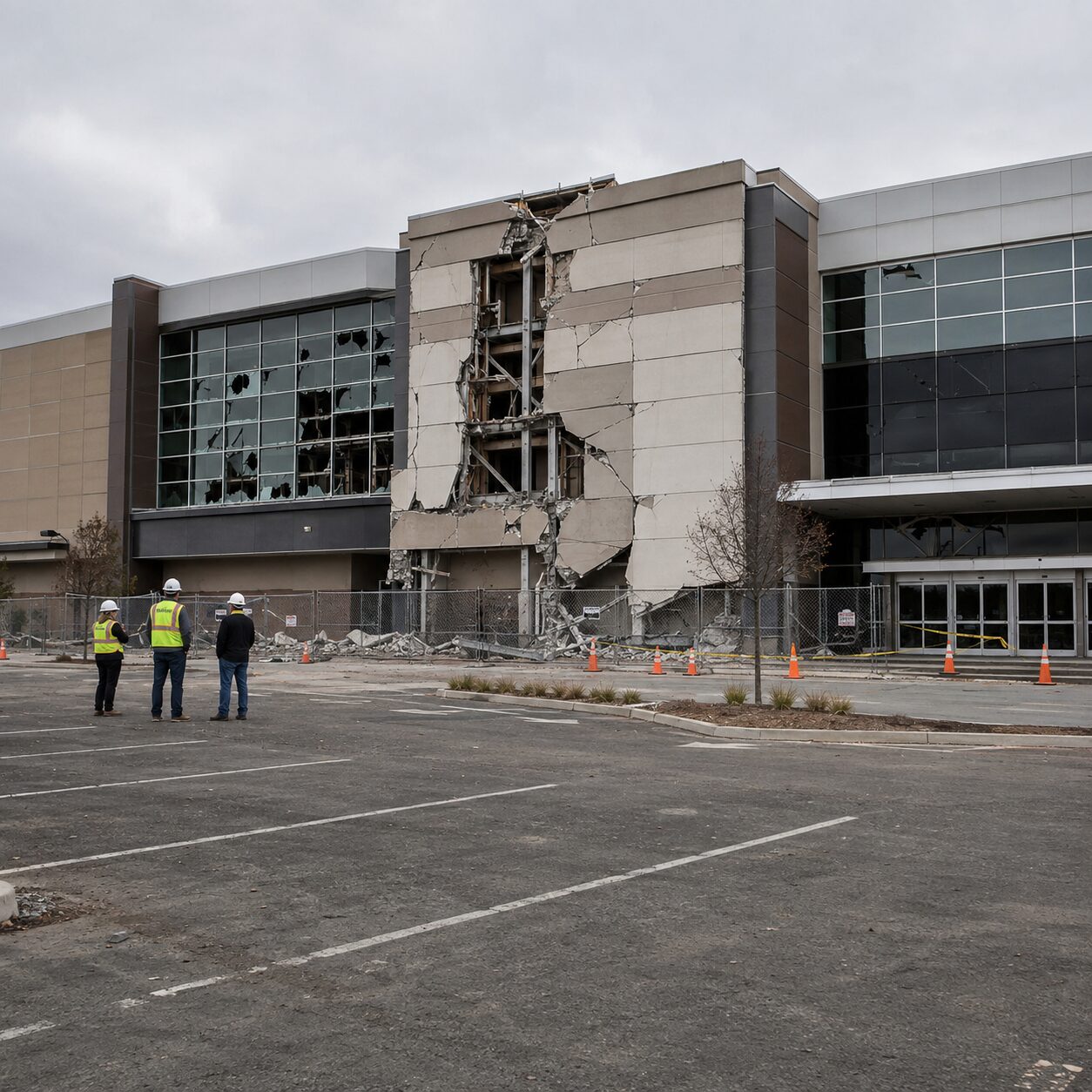
AEON Mall Kumamoto in Kashima Town became one of the most serious individual disaster sites following the earthquake.
The large shopping and entertainment complex contained approximately 200 specialist shops as well as restaurants, entertainment facilities and other businesses.
The earthquake struck while the mall was open. Customers were evacuated following the intense shaking.
A powerful explosion later occurred inside the building, causing severe structural damage. Parts of the second floor and exterior walls collapsed, and large quantities of debris were thrown across parts of the property.
Seven People Died at AEON Mall Kumamoto
The final rescue operation confirmed that seven specialist-store employees died in the disaster.
AEON later reported that 26 employees and others were injured as a result of the earthquake and explosion.
All seven people who died had apparently been outside after the initial evacuation but later returned to the building before the explosion.
Questions were subsequently raised over why employees re-entered the damaged shopping centre and what instructions had been given after the earthquake.
AEON has said it is examining the circumstances and has established an external accident investigation committee.
LP Gas Explosion Now Considered Highly Likely
In the first hours after the disaster, authorities could not determine whether the explosion had been caused by gas, electricity or another source.
Subsequent inspections by the Ministry of Economy, Trade and Industry, police and fire authorities found that an LP gas explosion was highly likely.
Investigators believe earthquake damage may have caused LP gas to escape somewhere in or around the building before it ignited.
However, the investigation is not yet complete.
Authorities are still examining questions including:
- Where the gas leaked
- How much gas accumulated
- How the gas spread through the building
- What caused ignition
- Whether building structures contributed to the accumulation of gas
- Whether safety systems and evacuation procedures functioned as intended
Accident Investigation Committee Established
A formal accident investigation committee held its first meeting on September 3.
The panel includes specialists in gas explosions, fire safety, building structures and gas supply systems.
Investigators are considering interviews with businesses involved in the mall, additional site inspections and possible reconstruction experiments to understand how the explosion occurred.
The investigation is also expected to examine measures that could prevent similar accidents at large commercial facilities following future earthquakes.
AEON Mall Kumamoto Remains Closed
AEON Mall Kumamoto remained largely closed as of late September.
The operator said that it could not provide a timetable for reopening because the cause of the explosion was still being investigated and the extent of repairs required had not yet been determined.
In September, AEON approached all 204 specialist-store tenants about potentially terminating their current contracts while the mall remains unusable.
AEON stressed that this did not necessarily mean the shopping centre would permanently close. The measure was intended to avoid leaving tenants tied to contracts while there was no clear reopening date.
Nippon Paper Industries Factory Disaster
The Nippon Paper Industries factory in Yatsushiro City was another major disaster site.
A large chimney collapsed during the earthquake, trapping workers beneath damaged structures.
Eleven workers were initially caught in the collapse.
Nine workers died and two were rescued alive.
Several chimneys at the factory were damaged, including a approximately 110-metre-high chimney whose upper section was left severely damaged.
Nippon Paper later began dismantling damaged chimney sections and carrying out safety work at the factory.
The accident accounted for a significant portion of the fatalities recorded in Yatsushiro City.
Evacuation Continues More Than Two Months Later
The number of evacuees has fallen substantially since the first days after the earthquake, but not everyone has been able to return home.
At the height of the emergency, hundreds of evacuation centres were opened and thousands of people sought shelter.
By September 29:
- 29 evacuation shelters remained open
- 1,409 people were still staying in shelters
This was down sharply from late July, when more than 9,000 people were staying in evacuation centres.
Many people have moved into hotels, public housing, privately rented temporary accommodation or newly constructed temporary housing.
Temporary Housing Construction
Kumamoto Prefecture has been constructing temporary housing for residents whose homes were destroyed or are unsafe to occupy.
The first construction work began in Uki City and Hikawa Town in early August.
By late September, temporary housing complexes had been completed in several municipalities, including Uki, Hikawa, Kosa and Misato.
Construction continues in other communities.
Authorities are also providing rented private accommodation as temporary housing for eligible households.
The transition from emergency shelters to more stable housing has become one of the main priorities of the recovery phase.
Housing Damage Assessments Continue
The number of homes officially recorded as damaged increased significantly during August and September as municipal inspectors carried out detailed surveys.
This does not necessarily mean that new earthquake damage was occurring.
In many cases, houses initially recorded as having minor damage were later inspected in detail and officially classified for disaster certificates and financial assistance.
Local governments are continuing to issue disaster victim certificates and process applications for:
- Emergency repairs
- Temporary housing
- Demolition of severely damaged homes
- Financial assistance for rebuilding
- Publicly funded demolition
Publicly funded demolition of some severely damaged homes began in late September.
Power and Water Services Largely Restored
Immediately after the earthquake, tens of thousands of households lost electricity and large areas experienced water outages.
Damage to water pipes was particularly serious in parts of Yatsushiro, Uki and surrounding communities.
Emergency repairs continued throughout August.
By late September, the major emergency water outages had been resolved, although work on damaged water infrastructure and individual properties continued.
Electricity supplies were also restored during the early recovery period.
Kyushu Shinkansen Fully Reopened on September 18
The Kyushu Shinkansen suffered significant disruption after the earthquake.
Services were initially suspended while engineers inspected tracks, structures, power equipment and stations.
Damage in the Kumamoto area required extensive repairs.
Full operation between Hakata and Kagoshima-Chuo resumed on September 18, restoring the main high-speed rail connection through Kyushu.
Some temporary speed restrictions remained after reopening.
Conventional Railway Services Still Affected
Recovery of conventional railway lines has taken longer.
As of October 1, the Kagoshima Main Line between Uto and Yatsushiro remained suspended.
JR Kyushu planned to resume normal service on the section from the first trains on October 10, subject to weather and reconstruction conditions.
Replacement bus services and alternative transportation have been provided during the closure.
Some sections of the Hisatsu Orange Railway were also affected.
Aso Kumamoto Airport Returns to Normal Operations
Flights were cancelled or diverted immediately after the earthquake while airport facilities and the runway were inspected.
However, damage at Aso Kumamoto Airport was relatively limited.
By August 3, the airport operator said the terminal had returned to normal operations, although minor repairs continued.
All airport shops had also reopened.
Roads and Infrastructure
Roads, bridges and other infrastructure across central and southern Kumamoto suffered extensive damage.
Cracks, subsidence and structural failures temporarily closed major and local roads.
Many emergency closures have since been lifted, but reconstruction work remains underway at damaged roads, rivers and other public infrastructure.
The national and prefectural governments have introduced simplified disaster assessment procedures to speed up reconstruction projects.
Kumamoto Castle Damage
Kumamoto Castle sustained additional damage during the earthquake, particularly to stone walls and areas already undergoing restoration following the 2016 Kumamoto earthquakes.
The castle had never fully recovered from the earlier disaster, and the new earthquake created additional repair work.
Officials and cultural-property specialists have continued inspections and restoration planning.
Some areas remain subject to access restrictions depending on structural conditions.
Impact on Manufacturing
Kumamoto is a major centre for semiconductor, electronics, automotive and other manufacturing industries.
Factories throughout the region temporarily stopped production or evacuated employees following the earthquake.
TSMC’s Japan Advanced Semiconductor Manufacturing operation in Kikuyo carried out inspections after evacuating workers. The company reported that personnel were safe and that major building structures were secure.
Other companies, including Sony, Honda and Mitsubishi Electric, also temporarily suspended operations or carried out inspections.
Much of the region’s industrial activity subsequently resumed, although individual factories with direct structural damage required longer repairs.
Was There a Tsunami?
The Japan Meteorological Agency issued a tsunami advisory for areas around the Ariake Sea and Yatsushiro Sea shortly after the main earthquake.
Residents near the coast and river mouths were advised to move away from the water.
The advisory was lifted approximately two hours later.
No major tsunami damage was reported.
Aftershock Activity: What Is the Situation Now?
Strong aftershocks followed immediately after the magnitude 7.1 main earthquake.
Earthquakes producing seismic intensity 5-lower occurred on:
- July 28 at 4:29 p.m.
- July 28 at 5:08 p.m.
- July 28 at 7:03 p.m.
- July 29 at 10:19 p.m.
- August 1 at 9:47 p.m.
By late September, however, the situation had changed substantially.
The Japan Meteorological Agency said on September 24 that earthquake activity remained higher than normal and was expected to continue for some time.
At the same time, the agency said the likelihood of another earthquake producing seismic intensity 5-lower or stronger had decreased considerably.
The frequency had fallen below a level equivalent to approximately one such earthquake per month.
Residents should therefore continue ordinary earthquake preparedness, but the extremely high short-term aftershock risk that existed immediately after July 28 has passed.
Is the 2026 Earthquake Connected to the 2016 Kumamoto Earthquakes?
The 2026 earthquake occurred in the same broader region as the destructive Kumamoto earthquake sequence of April 2016.
Both disasters occurred in an area containing major active fault systems, including the Futagawa and Hinagu fault zones.
However, the 2026 earthquake should not simply be described as an “aftershock” of the 2016 earthquake.
Ten years separate the events, and seismologists examine the location, fault movement and stress changes associated with each earthquake separately.
The Japan Meteorological Agency and Japan’s Earthquake Research Committee have continued analysing the 2026 sequence.
Is the Kumamoto Earthquake Connected to the Nankai Trough?
There has been no official announcement that the 2026 Kumamoto earthquake triggered or represents the beginning of a Nankai Trough megathrust earthquake.
The Kumamoto earthquake occurred within the crust beneath inland Kyushu.
Nankai Trough earthquakes occur along the offshore plate boundary where the Philippine Sea Plate is being subducted beneath southwestern Japan.
They therefore involve different earthquake mechanisms and locations.
A large inland earthquake can alter stresses in the surrounding crust, but this does not mean that a Nankai Trough earthquake is about to occur.
Claims that the Kumamoto earthquake proves a Nankai Trough megathrust earthquake is imminent are not supported by official scientific assessments.
Recovery Has Entered a New Phase
By October, the immediate emergency response has largely shifted toward long-term recovery.
Major priorities now include:
- Moving evacuees into stable housing
- Completing temporary housing
- Repairing and rebuilding damaged homes
- Demolishing buildings that cannot safely be repaired
- Restoring railway and road networks
- Supporting local businesses
- Investigating the AEON Mall explosion
- Providing long-term health and psychological support
The Kumamoto Prefectural Government has established a recovery and reconstruction headquarters to coordinate the next stage of the response.
Frequently Asked Questions
When did the Kumamoto earthquake occur?
The main earthquake occurred at approximately 4:27 p.m. Japan Standard Time on July 28, 2026.
How strong was the earthquake?
The Japan Meteorological Agency measured it at magnitude 7.1. Maximum seismic intensity 7 was recorded in Uki City and Hikawa Town.
How deep was the earthquake?
The earthquake had a depth of 16 kilometres. An initial estimate of approximately 10 kilometres was later revised.
What is the official name of the earthquake?
The Japan Meteorological Agency named the sequence the Reiwa 8 Kumamoto Earthquake, or 令和8年熊本地震 in Japanese.
How many people died in the 2026 Kumamoto earthquake?
The latest Kumamoto Prefecture report lists 38 deaths as of September 29, 2026.
How many people were injured?
Kumamoto Prefecture’s September 29 report lists 370 injured people.
How many people died at AEON Mall Kumamoto?
Seven specialist-store employees died in the explosion and structural collapse.
What caused the AEON Mall Kumamoto explosion?
Government investigators have said an LP gas explosion is considered highly likely. However, the precise leak location, ignition source and complete sequence of events remain under investigation.
Has AEON Mall Kumamoto reopened?
No. Most of the mall remained closed as of late September, and AEON had not announced a reopening date.
How many people died at the Nippon Paper factory?
Nine workers died after a large chimney and surrounding structures collapsed at the Yatsushiro factory.
Are people still living in evacuation shelters?
Yes. As of September 29, 1,409 people were staying in 29 evacuation shelters.
Is the Kyushu Shinkansen running?
Yes. The entire Kyushu Shinkansen resumed operation on September 18.
Are all railway services back to normal?
No. As of October 1, the Kagoshima Main Line between Uto and Yatsushiro remained suspended. JR Kyushu planned to resume service on October 10.
Are strong aftershocks still expected?
Earthquake activity remains above normal, but the Japan Meteorological Agency says the probability of another earthquake producing seismic intensity 5-lower or greater has substantially decreased compared with the period immediately after the main earthquake.
Conclusion
The 2026 Kumamoto earthquake caused severe loss of life and widespread damage across central and southern Kumamoto Prefecture.
The latest prefectural figures list 38 deaths and 370 injuries.
Seven people died at AEON Mall Kumamoto, where investigators now believe an LP gas explosion was highly likely. A formal investigation into the leak, ignition source, building damage and evacuation procedures is continuing.
Nine workers died at the Nippon Paper Industries factory in Yatsushiro after a chimney collapse.
More than two months after the earthquake, the emergency phase has largely ended. The Kyushu Shinkansen has reopened, airport operations have returned to normal and major utility outages have been resolved.
However, 1,409 people were still living in evacuation shelters at the end of September, damaged housing remains a major problem and reconstruction will continue for a considerable period.
The Japan Meteorological Agency says earthquake activity remains somewhat elevated, although the immediate risk of another very strong aftershock has declined substantially.
Residents and visitors should continue to follow information from the Japan Meteorological Agency, Kumamoto Prefecture, local municipalities and transportation operators as recovery progresses.