July 26, 2026
Japan Luggage Express

Japan Luggage Express Ltd.
Palestine Population Percentage by Religion
Palestine Population Percentage by Religion
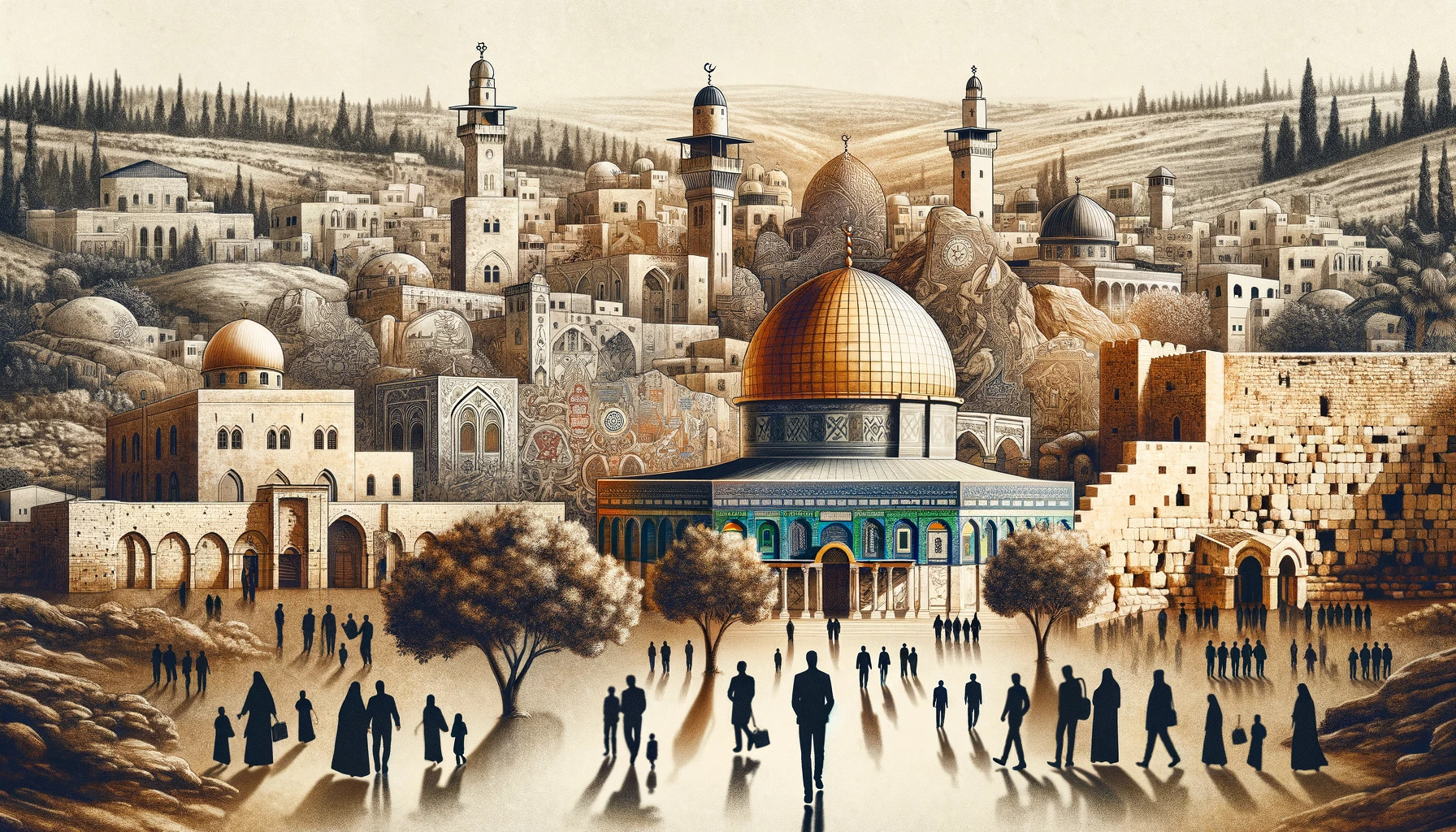
Palestine is often described as a religiously important land because of its deep connection to Islam, Christianity, and Judaism. However, when looking at the population of Palestinians living in the State of Palestine today, the religious breakdown is much less evenly divided than many people imagine.
The overwhelming majority of Palestinians are Muslim, while Christians form a small but historically very important minority. Other religious groups make up only a very small share of the population. The percentage can look different depending on whether the data counts only Palestinian residents or also includes Israeli settlers living in the West Bank and East Jerusalem.
Quick Answer: What Is the Religion Percentage in Palestine?
Based on the latest available Palestinian census data by religion, the population of Palestinian residents is approximately:
| Religion | Population Share | Approximate Census Count |
|---|---|---|
| Islam | About 99% | 4,615,683 |
| Christianity | About 1% | 46,850 |
| Other religions | Less than 0.1% | 1,384 |
In simple terms, Palestine’s Palestinian resident population is overwhelmingly Muslim, with Christians making up around one percent and other religious groups forming a very small minority.
Important Note: What Does “Palestine” Mean in Population Statistics?
The answer depends on how “Palestine” is defined. In most Palestinian demographic data, Palestine refers to the State of Palestine, mainly the West Bank and Gaza Strip. These figures usually focus on Palestinian residents.
However, some international demographic tables include Israeli settlers living in the West Bank and East Jerusalem. When those populations are included, the religious percentage changes because a significant Jewish Israeli population lives in settlements in the West Bank and East Jerusalem.
For this reason, religion statistics for Palestine may appear different from one source to another. One table may show Palestinians by religion, while another may show all residents living in the territory, including Israeli settlers.
Islam in Palestine
Islam is by far the largest religion among Palestinians. Most Palestinian Muslims are Sunni Muslims. Islam shapes many aspects of public life, family customs, holidays, education, and cultural identity in both the West Bank and Gaza Strip.
Important Islamic sites are also closely connected with Palestinian history and identity. The most prominent example is Al-Aqsa Mosque in Jerusalem, one of the most significant religious sites in Islam.
Although Palestine is not religiously uniform in every historical or cultural sense, the modern Palestinian population is clearly Muslim-majority. In percentage terms, Muslims make up roughly 99 percent of Palestinian residents.
Christianity in Palestine
Christianity has a very long history in Palestine. Bethlehem, Jerusalem, Ramallah, Beit Jala, Beit Sahour, and other towns are closely associated with Palestinian Christian life. Bethlehem is especially important because of its connection with the birth of Jesus.
Despite this deep history, Christians are now a small minority in the Palestinian territories. The Palestinian Christian population is concentrated mainly in the West Bank, especially around Bethlehem, Ramallah, and Jerusalem. Gaza also has a small Christian community, but it is much smaller than the Christian population in the West Bank.
Palestinian Christians include Greek Orthodox, Roman Catholic, Melkite Greek Catholic, Armenian, Anglican, Lutheran, and other denominations. Their share of the population is small, but their cultural, educational, and historical role is much larger than the percentage alone suggests.
Other Religions in Palestine
Other religious groups make up less than one tenth of one percent of the Palestinian resident population. In Palestinian census data, these groups are usually placed together under “others.”
This category may include very small communities and people who do not fall into the main Muslim or Christian categories. Because the number is tiny, these groups rarely appear separately in basic population tables.
Are There Jews in Palestine’s Population Figures?
This is one of the most common points of confusion. Jewish people are deeply connected to the history of the land, and Judaism has many holy sites in Jerusalem, Hebron, and other areas. However, when Palestinian statistics count the Palestinian population by religion, Jews are generally not listed as a major category because the data is focused on Palestinian residents.
Some international statistics for the West Bank do include Israeli Jewish settlers. In those cases, the Jewish percentage can appear as a noticeable share of the West Bank population. This does not mean that the Palestinian resident population itself has a large Jewish component. It means the table is using a broader territorial definition that includes Israeli settlers.
Religion in Gaza vs. the West Bank
The religious balance is not exactly the same in Gaza and the West Bank.
Gaza is almost entirely Muslim, with only a very small Christian minority. The Christian community in Gaza has become smaller over time due to migration, conflict, economic hardship, and security conditions.
The West Bank is also Muslim-majority, but it has a larger Christian presence than Gaza. Many of the best-known Palestinian Christian communities are located in the West Bank, especially around Bethlehem and Ramallah.
When Israeli settlers are included in West Bank statistics, the religious composition changes because many settlers are Jewish. This is why West Bank religious statistics can look different depending on the source.
Why Did the Christian Percentage Become So Small?
Historically, Christians made up a larger share of the population in Palestine than they do today. Over time, several factors contributed to the decline in their percentage.
One reason is emigration. Many Palestinian Christians have moved abroad, especially to North America, Latin America, Europe, and other parts of the Middle East. Economic difficulty, political instability, restrictions on movement, and conflict have all contributed to migration.
Another reason is demographic growth. The Muslim population has grown faster over time, which has reduced the Christian share as a percentage of the total population even when Christian communities continue to exist.
This does not mean Christianity has disappeared from Palestine. Palestinian Christians remain an important part of Palestinian society, especially in towns with long Christian histories.
Why Do Different Sources Give Different Percentages?
There are three main reasons why religion statistics for Palestine vary:
- Different definitions of Palestine: Some data refers only to Palestinian residents, while other data includes Israeli settlers in the West Bank and East Jerusalem.
- Different geographic coverage: Some sources count the West Bank and Gaza together, while others separate them.
- Different dates: Some religion data comes from census years, while newer population estimates may not include a full religious breakdown.
For a clear answer, it is best to say that among Palestinian residents, Palestine is about 99 percent Muslim, about 1 percent Christian, and less than 0.1 percent other religions. If Israeli settlers are included in West Bank statistics, the Jewish share becomes visible in the data, but that is a different population definition.
Summary
Palestine’s population by religion is overwhelmingly Muslim. Christians form a small but historically significant minority, especially in the West Bank. Other religious groups account for only a tiny share of the Palestinian resident population.
The most important point is that population percentages depend on the definition being used. If the data refers to Palestinian residents, the breakdown is roughly 99 percent Muslim, 1 percent Christian, and less than 0.1 percent other. If the data includes Israeli settlers in the West Bank and East Jerusalem, the percentage of Jews appears in the total territorial population and the overall religious balance changes.
Understanding this distinction helps avoid confusion and gives a more accurate picture of religion in Palestine today.