June 10, 2026
Japan Luggage Express
Japan Luggage Express Ltd.
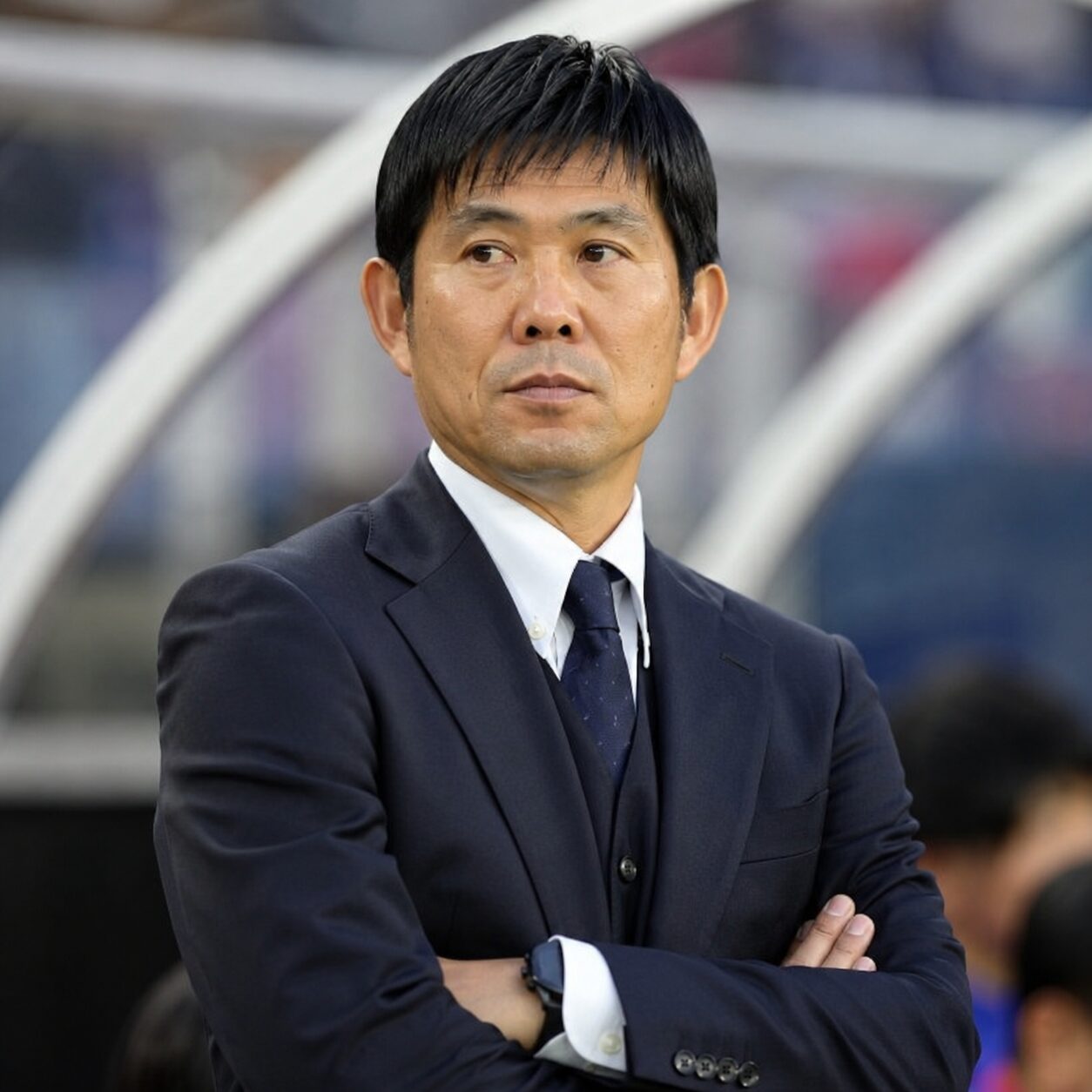
Hajime Moriyasu Biography
Hajime Moriyasu Biography
The Career of Japan’s National Team Coach Explained in Chronological Order
Hajime Moriyasu is the head coach of the Japan national football team, also known as the Samurai Blue. He is one of the most important figures in modern Japanese football, not only because of his current role, but also because his career reflects the development of Japanese football itself.
For readers outside Japan, Moriyasu may be best known as the coach who led Japan to famous victories over Germany and Spain at the 2022 FIFA World Cup in Qatar. Those results shocked many international fans and helped change the way the world viewed Japanese football.
However, Moriyasu’s story did not begin with the 2022 World Cup. He was a player during the early years of Japan’s rise as a football nation, experienced one of the most painful moments in Japanese football history, won major titles as a club manager, coached Japan’s Olympic generation, and eventually became the national team manager.
This article explains Hajime Moriyasu’s career in chronological order, with background information for readers who may not be familiar with Japanese football history.
Basic Profile of Hajime Moriyasu
| Item | Details |
|---|---|
| Name | Hajime Moriyasu |
| Date of birth | August 23, 1968 |
| Birthplace | Nagasaki, Japan |
| Position as a player | Midfielder |
| Main clubs as a player | Mazda SC, Sanfrecce Hiroshima, Kyoto Purple Sanga, Vegalta Sendai |
| Japan national team record as a player | 35 caps, 1 goal |
| Main coaching roles | Sanfrecce Hiroshima manager, Japan Olympic team coach, Japan national team coach |
As a player, Moriyasu was a defensive midfielder. He was not the kind of player who attracted attention with spectacular dribbles or many goals. Instead, he was known for reading the game, protecting the defense, keeping the team balanced and supporting teammates around him.
That playing style is important for understanding him as a coach. Moriyasu’s teams often emphasize balance, discipline, defensive organization and collective responsibility. He is not usually described as a flashy or emotional coach. His image is calm, patient and methodical.
1968: Born in Nagasaki
Hajime Moriyasu was born on August 23, 1968, in Nagasaki, a city in western Japan.
Nagasaki is not usually the first place international football fans think of when they hear about Japanese football. Cities such as Tokyo, Osaka, Yokohama or Saitama are more widely known. However, like many regions in Japan, Nagasaki has a strong school and community sports culture.
Moriyasu grew up in an era when professional football did not yet exist in Japan. The J.League, Japan’s professional football league, would not begin until 1993. This means Moriyasu’s early football life belonged to a very different Japan: one where baseball was far more dominant and football was still trying to build a national identity.
Late 1970s to Early 1980s: His Early Football Years
Moriyasu began playing football as a child in Nagasaki. Like many Japanese players of his generation, his development came through local youth football and school teams rather than a fully professional academy system.
This is important for overseas readers to understand. Today, Japanese football has professional club academies, youth national teams and a strong development structure. But when Moriyasu was young, Japan was still building that system.
His early years were shaped by local football, school competition and steady development. He was not a global teenage superstar. Instead, he gradually built his career through persistence and discipline.
1984–1986: High School Football in Nagasaki
Moriyasu attended Nagasaki Nihon University High School, where he continued to develop as a footballer.
High school football has a special place in Japanese sports culture. Unlike in many European or South American countries, where professional club academies are often the main route for young players, Japanese high school football has historically been a major pathway.
Many Japanese players have become professionals after playing in school tournaments. These competitions are widely followed in Japan, especially the national high school football championship. For Moriyasu, high school football was an important step before entering the senior game.
1987: Joining Mazda Soccer Club
In 1987, Moriyasu joined Mazda Soccer Club.
For readers unfamiliar with Japanese football history, Mazda Soccer Club was the predecessor of Sanfrecce Hiroshima. Before the launch of the J.League in 1993, many Japanese football clubs were company teams. They were owned or supported by major corporations, and their players were often connected to those companies.
This was common in Japan before the professional era. Clubs such as Mazda, Mitsubishi, Yomiuri, Nissan and others later became part of the foundation of modern Japanese professional football.
Moriyasu’s move to Mazda placed him inside one of the clubs that would become important in the early J.League era.
Early 1990s: Japanese Football Before the J.League
To understand Moriyasu’s career, it is necessary to understand how different Japanese football was before the J.League.
Japan had not yet qualified for a FIFA World Cup. The national team was not a global name. Domestic football did not have the professional visibility it has today. Many of Japan’s best athletes were more likely to choose baseball, and football was still fighting for public attention.
The creation of the J.League in 1993 changed everything. It made football more visible, brought professional clubs to cities across Japan, attracted foreign stars and created a new football culture.
Moriyasu was part of the generation that lived through that transition from semi-professional company football to the professional J.League era.
1992: Becoming a Sanfrecce Hiroshima Player
In 1992, Mazda Soccer Club became part of the new professional football structure and was transformed into Sanfrecce Hiroshima.
Sanfrecce Hiroshima would become one of the notable clubs in Japanese football. The name “Sanfrecce” combines the Japanese word “san,” meaning three, and the Italian word “frecce,” meaning arrows. It refers to a famous historical story associated with the Hiroshima region about the strength of three arrows held together.
Moriyasu became one of the club’s important midfielders. He played a defensive role, helping the team maintain shape and balance. He was not the main goal scorer, but he was one of the players who allowed the team to function.
1992–1996: Japan National Team Player
Moriyasu also represented the Japan national team during the 1990s.
He earned 35 caps and scored one goal for Japan. This was a crucial period in Japanese football history. Japan was trying to qualify for the World Cup for the first time, and the national team was beginning to attract more attention at home.
As a defensive midfielder, Moriyasu’s job was to protect the back line, recover the ball and keep the team organized. This role may not always be glamorous, but it is essential in international football.
His experience as a national team player would later become valuable when he became Japan’s head coach. He understood the pressure of wearing the national shirt because he had lived it himself.
1993: The “Agony of Doha”
One of the most important events in Moriyasu’s playing career was the famous Japanese football tragedy known as the “Agony of Doha”.
In 1993, Japan was very close to qualifying for the 1994 FIFA World Cup in the United States. In the final match of the Asian qualifiers, Japan faced Iraq in Doha, Qatar. Japan was leading and appeared to be on the verge of its first-ever World Cup qualification.
But in the final moments, Iraq scored an equalizer. Japan missed out on the World Cup. The result became one of the most painful moments in Japanese football history.
For international readers, the “Agony of Doha” can be compared to a national sporting heartbreak that shaped an entire football culture. It was not just one lost match. It became a symbol of how close Japan had come to the world stage, and how far the country still had to go.
Moriyasu was part of that era. Decades later, he would lead Japan as a manager at the World Cup, showing how deeply his career is connected to Japan’s football journey.
1994: A Key Midfielder for Sanfrecce Hiroshima
In the early years of the J.League, Moriyasu continued to play an important role for Sanfrecce Hiroshima.
The early J.League was full of excitement. New clubs, large crowds, colorful uniforms, foreign stars and television coverage helped football grow rapidly in Japan. Moriyasu was not a marketing star, but he was an important football player in the middle of the pitch.
He represented the kind of player who helps a team become stable: tactically aware, disciplined and willing to do the less visible work.
This is also one reason why Moriyasu later became a successful coach. He had spent his playing career thinking about team balance rather than only individual expression.
1998: Moving to Kyoto Purple Sanga
In 1998, Moriyasu played for Kyoto Purple Sanga.
Kyoto Purple Sanga, now known as Kyoto Sanga, is another Japanese club with a long history in the professional era. Moving away from Hiroshima gave Moriyasu a new environment and a different team culture.
For a player who had been strongly associated with Hiroshima, this was an important experience. It gave him a wider view of Japanese football beyond one club.
Although this period was not the longest part of his career, it contributed to his understanding of how different clubs operate.
1999–2001: Return to Sanfrecce Hiroshima
Moriyasu returned to Sanfrecce Hiroshima in 1999.
By this stage, he was an experienced player. Younger teammates could learn from his positioning, leadership and understanding of the game. He was no longer simply a player developing his own career; he was also a veteran presence inside the squad.
This connection with Hiroshima became a defining part of his football life. He was a player there, later a staff member, and eventually the manager who brought the club major success.
2002–2003: Final Playing Years at Vegalta Sendai
Moriyasu spent the final stage of his playing career with Vegalta Sendai.
Vegalta Sendai is a club from the Tohoku region of Japan. The move marked the closing chapter of Moriyasu’s playing days.
He retired after building a long professional career as a midfielder. His playing record included hundreds of domestic league appearances and 35 matches for Japan.
After retirement, he did not leave football. Instead, he moved into coaching, beginning a new chapter that would eventually take him to the top of Japanese football.
2004–2007: Development Coach at Sanfrecce Hiroshima
After retiring as a player, Moriyasu began working as a development coach at Sanfrecce Hiroshima.
This step is important because it shows that he did not immediately become a famous head coach. He started by learning the coaching profession from the development side.
Development coaching is not only about teaching technique. It involves understanding young players, helping them grow mentally and tactically, and preparing them for professional football.
Moriyasu’s quiet, patient style was well suited to this kind of work. His years in development helped shape his approach as a coach.
2005–2007: Work with the Japan Football Association
During this period, Moriyasu also worked with the Japan Football Association, including roles related to youth national teams and regional development.
This gave him a broader view of Japanese football. Instead of only seeing one professional club, he was exposed to youth development, regional coaching and the structure of the national team system.
For a future national team coach, this experience was valuable. It helped him understand how players are developed across Japan and how the country’s football system functions as a whole.
2007–2009: Sanfrecce Hiroshima First-Team Coach
From 2007 to 2009, Moriyasu worked as a first-team coach at Sanfrecce Hiroshima.
This was another important step in his coaching education. As a first-team coach, he was closer to professional match preparation, tactical planning, training sessions and player management.
Many former players struggle when moving into coaching because playing and coaching require different skills. Moriyasu gradually built his experience instead of rushing into a top job.
That careful progression would later become one of the strengths of his career.
2010–2011: Assistant Role at Albirex Niigata
Moriyasu then worked as a head coach or assistant coach figure at Albirex Niigata, another J.League club.
This was important because it took him outside the Hiroshima environment. Working at a different club helped him experience another football culture, another group of players and another organizational structure.
For coaches, this kind of experience is valuable. It prevents them from seeing football only through one club’s traditions and habits.
2012: Appointed Manager of Sanfrecce Hiroshima
In 2012, Moriyasu became the manager of Sanfrecce Hiroshima.
This was the turning point in his coaching career. He returned to the club where he had built much of his identity as a player and staff member, but now he was in charge of the first team.
In his first season as manager, Moriyasu led Sanfrecce Hiroshima to the J1 League title.
For overseas readers, the J1 League is the top division of Japanese professional football. Winning it is the highest domestic league achievement in Japan. To win the title in his first year as manager was a major accomplishment.
2013: Winning Back-to-Back J1 League Titles
In 2013, Moriyasu led Sanfrecce Hiroshima to another J1 League title.
Winning a league once is difficult. Winning it again the following season is often even harder because opponents analyze the champion more carefully, pressure increases and players must maintain motivation.
Moriyasu’s Hiroshima team was organized, balanced and tactically disciplined. The team did not rely only on individual brilliance. It played as a collective unit, with clear roles and strong structure.
This back-to-back success made Moriyasu one of the most respected coaches in Japanese football.
2015: A Third J1 League Title
In 2015, Moriyasu won the J1 League title again with Sanfrecce Hiroshima.
By winning the league in 2012, 2013 and 2015, Moriyasu established himself as one of the most successful Japanese club managers of his generation.
This achievement matters because Japanese coaches have often struggled to receive the same recognition as foreign managers, both domestically and internationally. Moriyasu’s success showed that a Japanese coach could build a winning team at the highest domestic level.
His success at Hiroshima became the foundation for his later appointment to national team roles.
2017: Leaving Sanfrecce Hiroshima
In July 2017, Moriyasu stepped down as manager of Sanfrecce Hiroshima.
Even successful managerial periods eventually become difficult. Teams change, players move, opponents adapt and results can decline. Moriyasu experienced both the glory and pressure of club management.
Leaving Hiroshima was not the end of his coaching career. Instead, it became the transition point to a larger national role.
2017: Appointed Coach of Japan’s Olympic Generation
In 2017, Moriyasu was appointed to lead Japan’s Olympic-age national team, with the goal of preparing for the Tokyo Olympics.
This was a major responsibility. The Tokyo Olympics were especially important because Japan was the host nation. Football was one of the events where the country hoped to make a strong impression.
Coaching an Olympic team is different from coaching a club. The coach must develop young players, prepare them for international competition and also think about how they may contribute to the senior national team in the future.
This role helped Moriyasu move from club football into the national team structure.
2018: Appointed Japan National Team Coach
In July 2018, Moriyasu became the head coach of the Japan national team.
He took charge after the 2018 World Cup, where Japan had reached the Round of 16 under Akira Nishino but lost dramatically to Belgium after leading 2-0.
Moriyasu’s appointment was significant because he also continued to oversee the Olympic generation. This gave him influence over both the present and future of Japanese football.
For international readers, managing Japan is a complex job. Many of the best players are based in Europe, so the coach cannot work with them every day. He must build a team during short international windows, manage travel, monitor club form and maintain tactical clarity despite limited preparation time.
2019: Asian Cup Runner-Up
In 2019, Moriyasu led Japan to the final of the AFC Asian Cup.
The AFC Asian Cup is the main continental championship for Asian national teams. Japan has historically been one of the most successful countries in the tournament.
Japan reached the final but lost to Qatar. The result was a disappointment because Japan usually expects to compete for the title in Asia.
Still, reaching the final in his first major senior tournament showed that Moriyasu’s team could produce results. At the same time, the defeat revealed tactical and defensive issues that would continue to be discussed.
2021: Fourth Place at the Tokyo Olympics
In 2021, Moriyasu coached Japan’s Olympic team at the Tokyo Olympics.
Japan reached the semifinals but lost to Spain. The team then lost the bronze medal match to Mexico and finished fourth.
Although Japan missed out on a medal, reaching the final four at a home Olympics was still an important achievement. It also gave valuable international experience to several young players who later became part of the senior national team.
For Moriyasu, the Olympics added another layer to his experience: managing young players under huge domestic pressure.
2022: Japan’s Historic World Cup Wins Over Germany and Spain
The 2022 FIFA World Cup in Qatar was the moment that made Moriyasu known to many global football fans.
Japan was drawn into a very difficult group with Germany, Spain and Costa Rica. Many observers expected Germany and Spain to qualify comfortably.
Instead, Japan defeated Germany 2-1 in their opening match. Later, Japan beat Spain 2-1 as well. By defeating two former World Cup champions in the same group, Japan produced one of the biggest stories of the tournament.
Moriyasu’s tactical adjustments and substitutions received major attention. Japan often changed the flow of games in the second half. The team showed discipline, resilience and the ability to punish stronger opponents when opportunities appeared.
Japan finished top of the group, ahead of Spain and Germany.
2022: Round of 16 Loss to Croatia
Japan then faced Croatia in the Round of 16.
The match ended in a draw after extra time, and Japan lost on penalties. Once again, Japan failed to reach the World Cup quarterfinals.
This was painful because Japan had shown that it could beat elite teams. But the knockout stage revealed another challenge: winning under pressure when there is no second chance.
The loss to Croatia became an important lesson for Moriyasu and the team. It showed that Japan had grown, but also that the next step would require greater composure, finishing quality and penalty-shootout preparation.
December 2022: Moriyasu Continues as Japan Coach
After the 2022 World Cup, Moriyasu remained as Japan’s head coach.
This was significant in Japanese football history. Japan had often changed managers after World Cups, but Moriyasu was given the chance to continue and build toward 2026.
The decision reflected both the success and the unfinished business of Qatar. Japan had beaten Germany and Spain, but had not reached the quarterfinals. Moriyasu’s next mission became clear: take Japan beyond the Round of 16.
2023–2024: Building a Stronger Japan Team
After Qatar, Moriyasu began building a new version of Japan.
More Japanese players were competing in European leagues. Players such as Takefusa Kubo, Kaoru Mitoma, Ritsu Doan, Wataru Endo, Daichi Kamada, Ayase Ueda, Takehiro Tomiyasu and Ko Itakura gave Japan more international experience than ever before.
However, Japan also suffered disappointment at the 2023 AFC Asian Cup, where the team was eliminated in the quarterfinals. For a country with high expectations in Asian football, that result was widely viewed as a setback.
This showed that Japan’s development was not a straight line. The team could beat Germany and Spain at the World Cup, but still struggle against compact, disciplined opponents in Asia.
2025–2026: Preparing for the 2026 World Cup
As the 2026 World Cup approached, Moriyasu continued to shape Japan into a more mature team.
Japan’s squad had become one of the most European-based in Asian football. Many players were used to high-intensity matches in England, Spain, Germany, Italy, France, the Netherlands, Belgium and Scotland.
Moriyasu’s challenge was no longer simply to prove that Japan could compete. That had already been shown in 2022. The challenge was to make Japan consistent enough to win knockout matches.
By 2026, Japan’s ambition had grown. The goal was not merely to participate or to produce one famous upset. The goal was to reach the quarterfinals and possibly go beyond.
2026: Leading Japan at Another World Cup
At the 2026 World Cup, Moriyasu leads Japan again.
Japan’s group includes the Netherlands, Tunisia and Sweden. Each opponent presents a different challenge. The Netherlands have world-class players in every area. Tunisia are defensively organized and difficult to break down. Sweden bring physical power, aerial strength and dangerous forwards.
For Moriyasu, this tournament may define his legacy as Japan coach. In 2022, he proved that Japan could defeat elite teams. In 2026, the question is whether Japan can go deeper than ever before.
If Japan reaches the quarterfinals for the first time, Moriyasu will be remembered as one of the most successful coaches in the history of Japanese football.
Hajime Moriyasu Career Timeline
| Year | Event |
|---|---|
| 1968 | Born in Nagasaki, Japan |
| 1987 | Joined Mazda Soccer Club |
| 1992 | Became a Sanfrecce Hiroshima player as Japanese football entered the J.League era |
| 1992–1996 | Played for the Japan national team, earning 35 caps |
| 1993 | Experienced the “Agony of Doha” during World Cup qualifying |
| 1998 | Played for Kyoto Purple Sanga |
| 1999–2001 | Returned to Sanfrecce Hiroshima |
| 2002–2003 | Played for Vegalta Sendai |
| 2004–2007 | Worked as a development coach at Sanfrecce Hiroshima |
| 2005–2007 | Worked with the Japan Football Association in youth and development roles |
| 2007–2009 | Served as a first-team coach at Sanfrecce Hiroshima |
| 2010–2011 | Worked at Albirex Niigata as part of the coaching staff |
| 2012 | Appointed manager of Sanfrecce Hiroshima and won the J1 League title |
| 2013 | Won a second consecutive J1 League title with Sanfrecce Hiroshima |
| 2015 | Won a third J1 League title with Sanfrecce Hiroshima |
| 2017 | Left Sanfrecce Hiroshima and became coach of Japan’s Olympic generation |
| 2018 | Appointed head coach of the Japan national team |
| 2019 | Led Japan to the AFC Asian Cup final |
| 2021 | Finished fourth with Japan at the Tokyo Olympics |
| 2022 | Led Japan to World Cup wins over Germany and Spain |
| 2022 | Japan lost to Croatia on penalties in the Round of 16 |
| 2022 | Continued as Japan national team coach after the World Cup |
| 2026 | Leads Japan again at the FIFA World Cup |
Moriyasu’s Coaching Style
Hajime Moriyasu’s coaching style is often described as calm, balanced and pragmatic.
He does not usually present himself as a dramatic tactical revolutionary. Instead, he focuses on preparation, team unity, defensive structure and adapting to match situations.
His experience as a defensive midfielder is visible in his coaching. He cares deeply about the balance between attack and defense. He wants his teams to stay compact, protect central areas and transition quickly when the ball is won.
At the same time, Moriyasu has been criticized at times for conservative decisions, unclear attacking patterns or slow reactions when Japan struggle to break down defensive opponents. This criticism became louder after disappointing results in Asian competition.
Still, his supporters point to the 2022 World Cup as evidence of his strengths. His substitutions and tactical changes against Germany and Spain helped Japan produce historic victories.
Why Moriyasu Matters in Japanese Football History
Moriyasu matters because he connects several eras of Japanese football.
As a player, he experienced the period before Japan first reached the World Cup. He lived through the heartbreak of the “Agony of Doha.” He then played in the early J.League era, when professional football was becoming part of Japanese culture.
As a club manager, he proved that a Japanese coach could build a title-winning team in the J.League, winning three league titles with Sanfrecce Hiroshima.
As national team coach, he led Japan to some of the country’s most famous international victories. The wins over Germany and Spain in 2022 changed how many people outside Japan viewed the Samurai Blue.
His career is therefore not just the story of one coach. It is also a story of Japanese football’s growth from a developing football nation into a serious international competitor.
What His Career Says About Japanese Football
Moriyasu’s career also shows how Japanese football has changed.
When he began playing, Japan did not have a professional league. When he became a national team player, Japan was still trying to reach its first World Cup. When he became a manager, the J.League had matured. By the time he coached Japan in 2022 and 2026, many Japanese players were competing in Europe’s top leagues.
This transformation is remarkable. Japan moved from being a country outside the World Cup elite to a team capable of beating former world champions.
Moriyasu has been part of almost every stage of that journey.
Conclusion: Hajime Moriyasu and Japan’s Next Challenge
Hajime Moriyasu’s career is best understood as a long, steady rise through Japanese football.
He was not a global superstar as a player, but he was a smart and disciplined midfielder. He experienced the pain of Japan’s missed World Cup qualification in 1993. He became part of the early J.League era with Sanfrecce Hiroshima. After retirement, he learned coaching from the development level upward.
As manager of Sanfrecce Hiroshima, he won three J1 League titles. As Japan coach, he led the national team to historic wins over Germany and Spain at the 2022 World Cup.
Now, his challenge is to take Japan beyond the Round of 16 and into the World Cup quarterfinals for the first time.
For overseas readers, Moriyasu may seem like a quiet figure on the touchline. But his career carries the story of Japanese football’s rise. From the heartbreak of Doha to the victories in Qatar, and now toward the 2026 World Cup, Hajime Moriyasu remains one of the central figures in Japan’s search for a new football history.