September 15, 2026
Japan Luggage Express

Japan Luggage Express Ltd.
Japan “Solar Heaters for the Homeless”- Fact Check
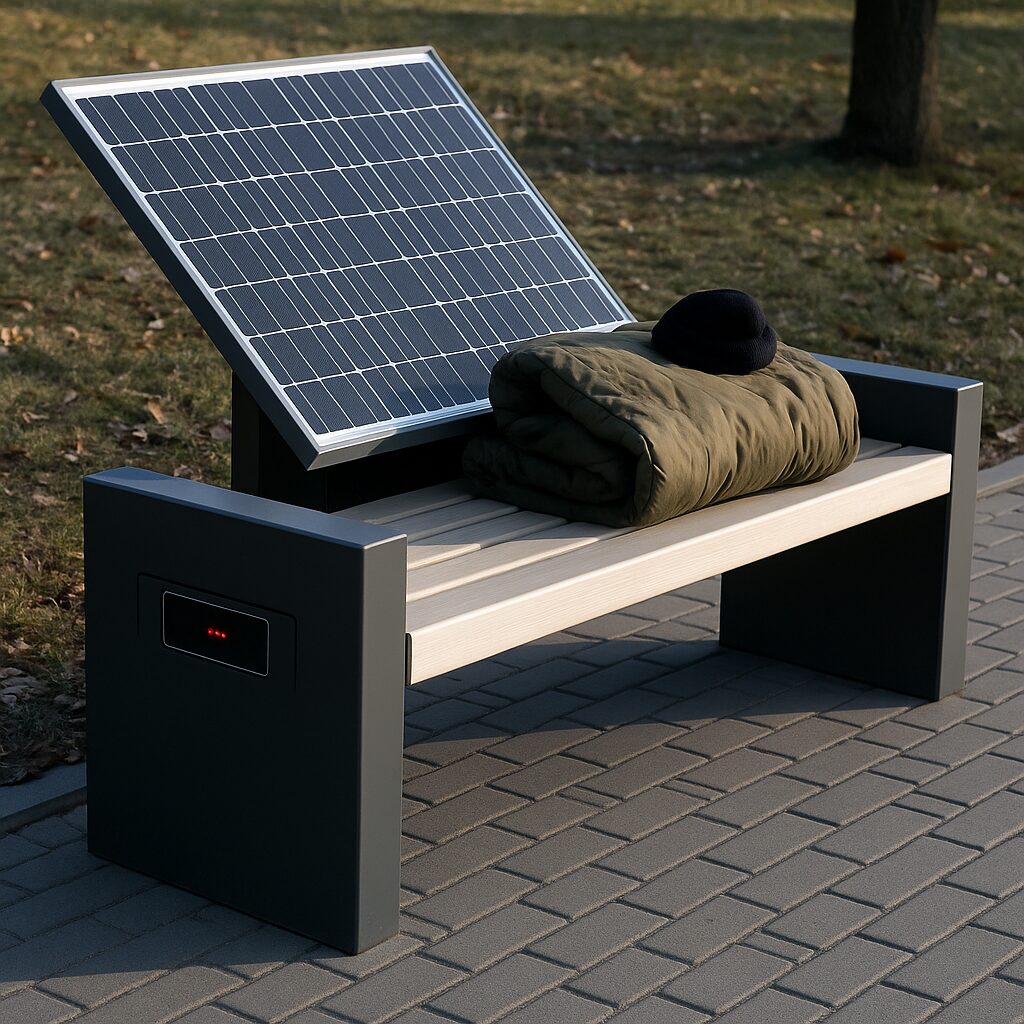
Japan “Solar Heaters for the Homeless”
Fact‑Checking a Viral Claim
If you’ve noticed “japan solar heaters for homeless” trending in U.S. searches, you’re not alone. The phrase is tied to a wave of viral posts claiming Japan has installed solar‑heated benches and bus shelters to keep unhoused people warm through freezing nights.
People living in Japan often react the same way you did: “I’ve never seen that here.” So let’s do a careful, plain‑English fact check.
1) What the internet claim usually says
Across social media, the story is repeated with minor variations:
- Japan is “piloting” solar‑powered heated benches (sometimes also bus shelters).
- The furniture stores heat during the day and releases it at night (often “up to 12 hours”).
- The installations are described as being in Tokyo and Sapporo.
- Some versions credit “researchers” at Kyoto University and/or JAIST.
- The purpose is framed as helping homeless people survive winter nights.
It’s a very shareable narrative: innovative tech + kindness + Japan.
2) What we can verify (and what we can’t)
Verdict
As of the latest available public information, there is no solid, verifiable evidence that Tokyo and Sapporo have an official, widely implemented program of “solar‑heated benches for the homeless” as described in the viral posts.
That doesn’t mean Japan has never tested any kind of heated street furniture anywhere. It means the specific viral story (locations, scale, attribution, and framing) does not hold up to basic verification.
Why the claim looks shaky
Here are the biggest red flags found when checking the story carefully:
- No clear original source The posts usually don’t name an identifiable project title, contractor, municipal department, or a link to a press release.
- The numbers don’t match reality Some versions claim the benches help “thousands” of homeless people in specific cities. But official homelessness counts in Japan (which focus on people sleeping rough) are far lower than the numbers circulating in these posts.
- Attribution without receipts When a story credits universities or research institutes, you would normally expect:
- a lab/project page,
- a paper,
- a demonstration site,
- or at minimum a news release. The viral captions typically provide none of that.
- Reposted captions, recycled imagery The wording is often near‑identical across accounts, suggesting copy‑pasted content rather than reporting.
3) What is real in Japan that may have been confused with this story
The viral story appears to blend real things into a single (likely) fictional “Japan is testing heated benches for homeless people” claim.
A) Japan really does have solar benches (but not “homeless heaters”)
In Japan (and globally), there are real products and demonstrations commonly called solar benches or smart benches, which may include:
- USB charging
- Wi‑Fi hotspots
- lighting
- sensors and monitoring
These benches are usually about convenience, tourism, smart‑city branding, or emergency charging—not nighttime heating for survival.
B) Many “smart benches” deal with overheating, not heating people
Some smart benches mention temperature management (e.g., cooling systems to protect equipment when surfaces get too hot in sunlight). That’s essentially the opposite of “warming people at night.”
C) Heated street furniture exists elsewhere (and gets misattributed to Japan)
Heated benches and warmed bus stops exist in some places outside Japan. Once a concept becomes a “feel‑good innovation meme,” it’s common for accounts to attach it to Japan because Japan is widely perceived as a high‑tech society.
4) Context: the real debate in Japan is often the opposite (hostile benches)
If anything, a frequent public conversation in Japan—especially in big cities—concerns “hostile” or “defensive” bench design (sometimes called haijo benches / 排除ベンチ), where benches are shaped to discourage long stays or sleeping.
This doesn’t prove the solar‑heater story is false by itself, but it’s an important reality check: the most visible bench controversy in Japan has often been about deterring rough sleeping, not encouraging outdoor sleeping with warm benches.
5) Why this search term might be spiking in the U.S.
A search trend can rise even if the underlying story is wrong. Common drivers:
- Algorithmic spread (a few viral posts → many reposts)
- Culture‑war framing (“Japan is compassionate, why aren’t we?”)
- Engagement incentives (posts that trigger outrage or admiration travel faster)
- AI‑generated content (fast “news‑like” posts that look credible, but aren’t sourced)
In other words, search volume measures curiosity, not truth.
6) How to fact‑check a claim like this (quick checklist)
If you want a method you can reuse for other viral “Japan did X” claims:
- Find the earliest post you can Scroll past reuploads. Look for the first account that published the exact phrasing.
- Demand a project name and a location A real pilot has a neighborhood, park name, ward/city office, date, and usually a contractor.
- Search in Japanese using likely terms Try combinations such as:
- 太陽熱 ベンチ
- ソーラーベンチ 東京
- 蓄熱 ベンチ 実証
- バス停 ヒーター ベンチ
- Check official sources City hall, ministries, public procurement notices, or reputable outlets.
- Check plausibility “Up to 12 hours of heat” sounds scientific, but real‑world performance depends on winter sun, insulation, storage mass, wind, and safety.
7) Bottom line
- The viral phrase “japan solar heaters for homeless” appears to be driven mainly by unsourced social media storytelling.
- Japan does have solar-powered benches and smart urban furniture, but these are typically about charging / Wi‑Fi / smart‑city features, not proven “overnight heating for homeless people.”
- The specific claim about Tokyo and Sapporo piloting solar-heated benches for the homeless is not supported by reliable, traceable public evidence.